


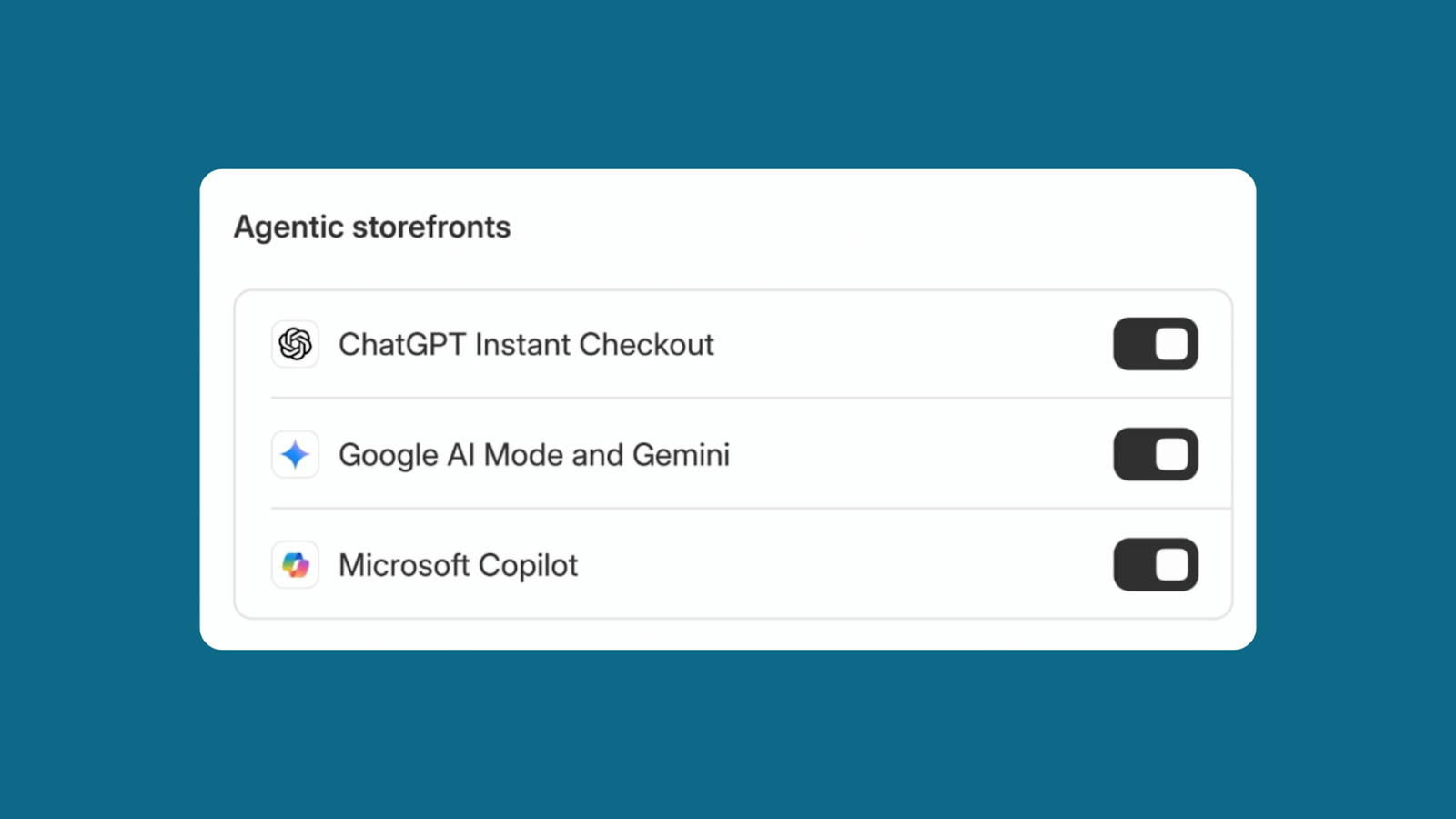
For years, eCommerce performance has largely been judged by what happens on-site. Traffic, conversion rate, average order value and retention have been the core signals of growth. These metrics still matter, but the route to purchase is changing. Shopify’s Agentic Storefronts give brands the ability to enable product discovery through AI channels such as ChatGPT, Google AI Mode, Gemini and Microsoft Copilot.
Customers now have more ways to discover products, and AI tools are becoming increasingly capable of helping shoppers compare options, narrow decisions, and move closer to purchase before they ever land on a website. For merchants, that makes agentic commerce more than just another trend. It marks a shift in how products are surfaced, evaluated and bought.
Agentic commerce does not mean the website is disappearing. It means the role of a high-performing Shopify store is changing slightly. This also presents a very unique opportunity for businesses on Shopify & other eCommerce platforms such as Magento, BigCommerce and WooCommerce to enable discovery in AI searches.
What is agentic commerce?
Agentic commerce is a model where AI systems do more than assist with product research. They can help shoppers discover products, compare options, evaluate availability and, in some cases, shop for products and place orders on your behalf.
In plain terms, agentic commerce means the buying journey is no longer limited to a customer manually browsing collection pages, filters and product detail pages. Increasingly, discovery can begin in AI chats, conversational search, shopping assistants and other intelligent interfaces.
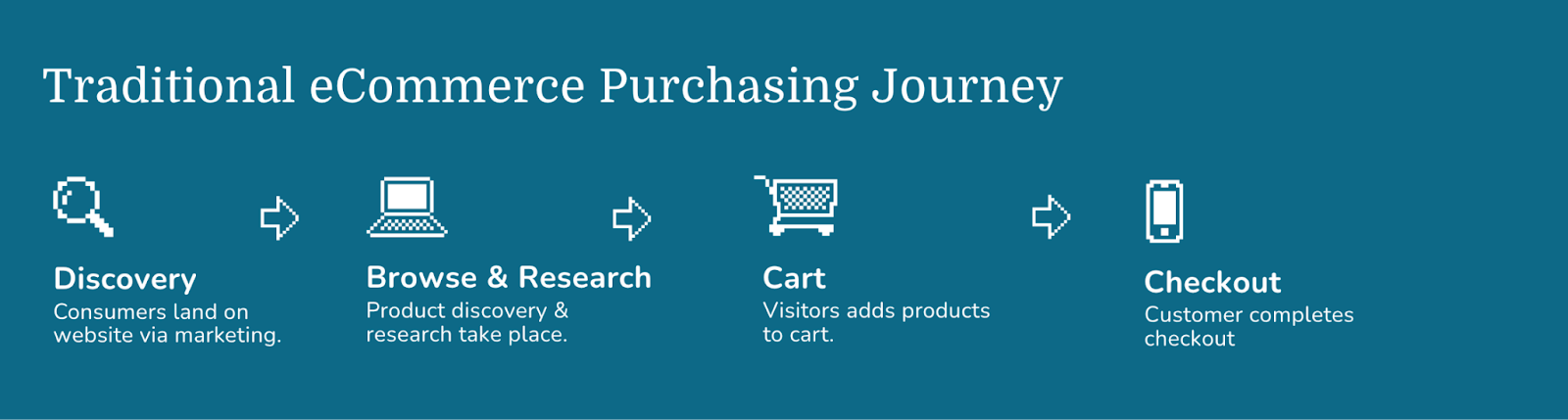
The traditional eCommerce purchasing journey typically goes from Discovery, user browses, the visitor adds to cart and then proceeds to checkout. At a core principle level, this path to purchase is still true and will be for many years.
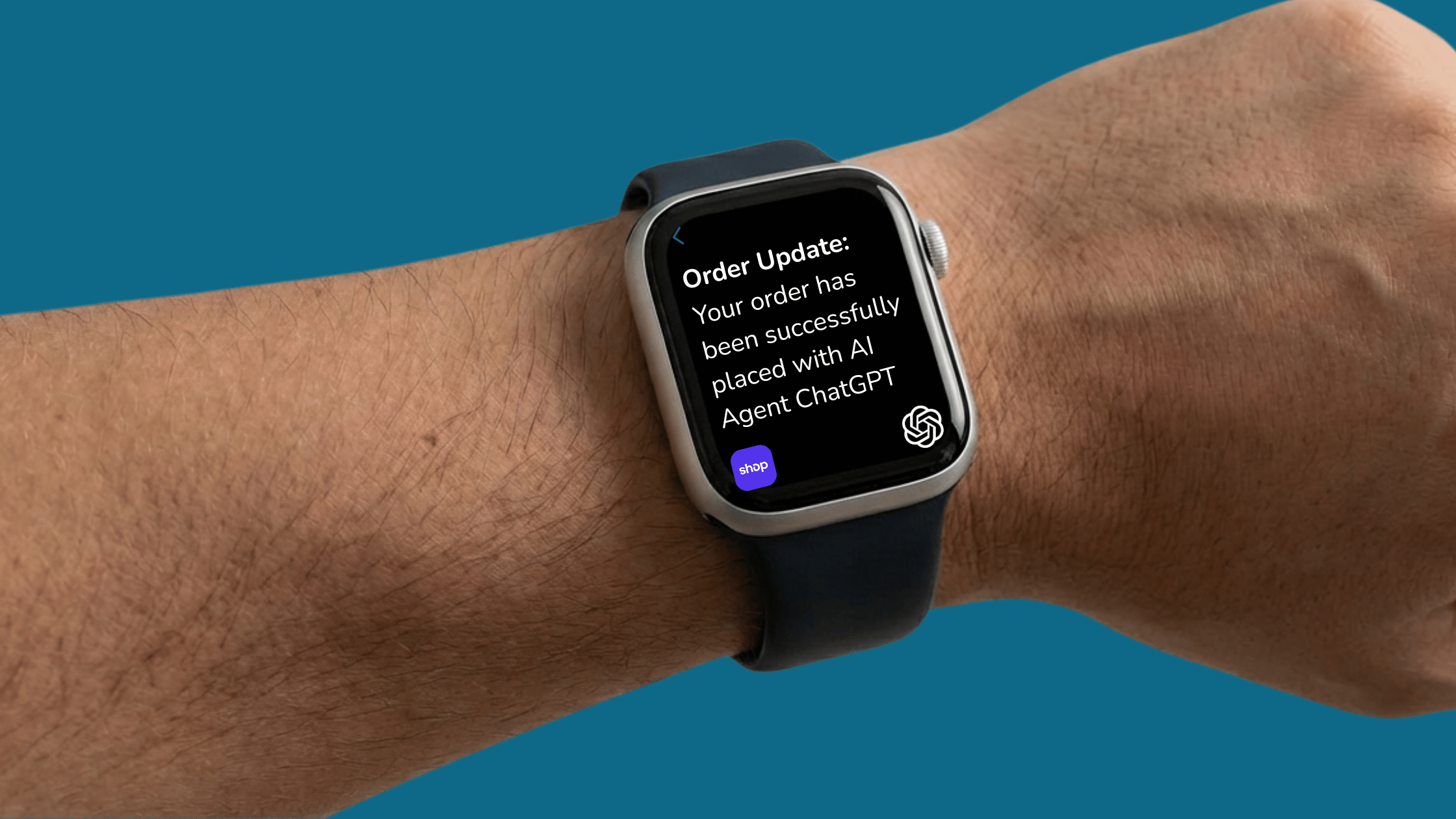
Where the path to purchase slightly changes with Agentic Commerce, that path to purchase is done within an AI chat window without a user seeing the website. AI agents will essentially feed a user's search query with the best available information from your Shopify store.

For merchants, that changes the question from “How do we get more clicks?” to “How do we make our products easier for AI systems to understand, trust and recommend?”
If you want a deeper look at the infrastructure behind this shift, our piece on Google’s UCP Update and the Rise of Agentic Commerce for eCommerce Brands expands on how this is starting to take shape.
Why Shopify brands should care about agentic commerce
Shopify’s official documentation now states that its ChatGPT agentic storefront is available to eligible stores, while Microsoft Copilot and Google AI Mode and Gemini remain in early access.
If you want to check if your Shopify store has Agentic Storefronts enabled, navigate to settings https://admin.shopify.com/store/YOUR-STORE-NAME/settings/sales_channels
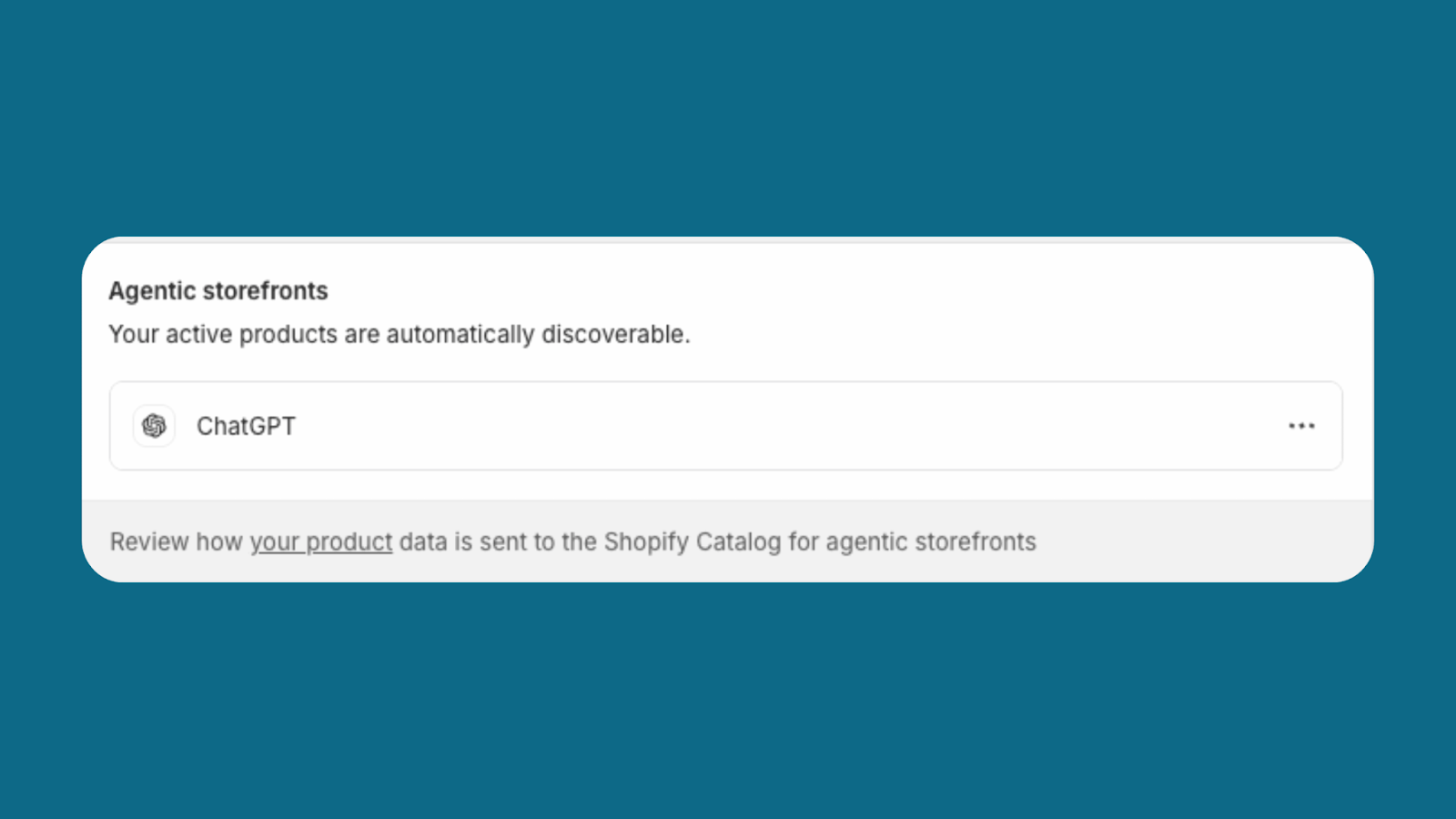
💡 Not seeing agentic storefronts yet? That is normal. Shopify’s rollout is still in progress, with ChatGPT available to eligible stores and other AI channels still in early access for many brands. The priority right now is not chasing the setting. It is making sure your product data is structured clearly enough for AI channels to understand, surface, and eventually support in richer shopping journeys.
Shopify also says products can still be discovered on AI channels through Shopify Catalog even where built-in checkout is not enabled. So if your website is on another legacy eCommerce or custom platform, you now have the opportunity to feed data to LLMs to enable product discovery.
That matters for three reasons.
1. Discovery is becoming more distributed
Your next customer may not start on Google, a collection page or a paid social ad. They may start by asking an AI tool for the best products for a specific need, delivery time or budget.
If that happens, the brands that appear are unlikely to be the ones with the flashiest homepage alone. They will be the brands with clean product data, structured attributes, consistent taxonomy and reliable availability.
2. Product data is becoming a growth asset
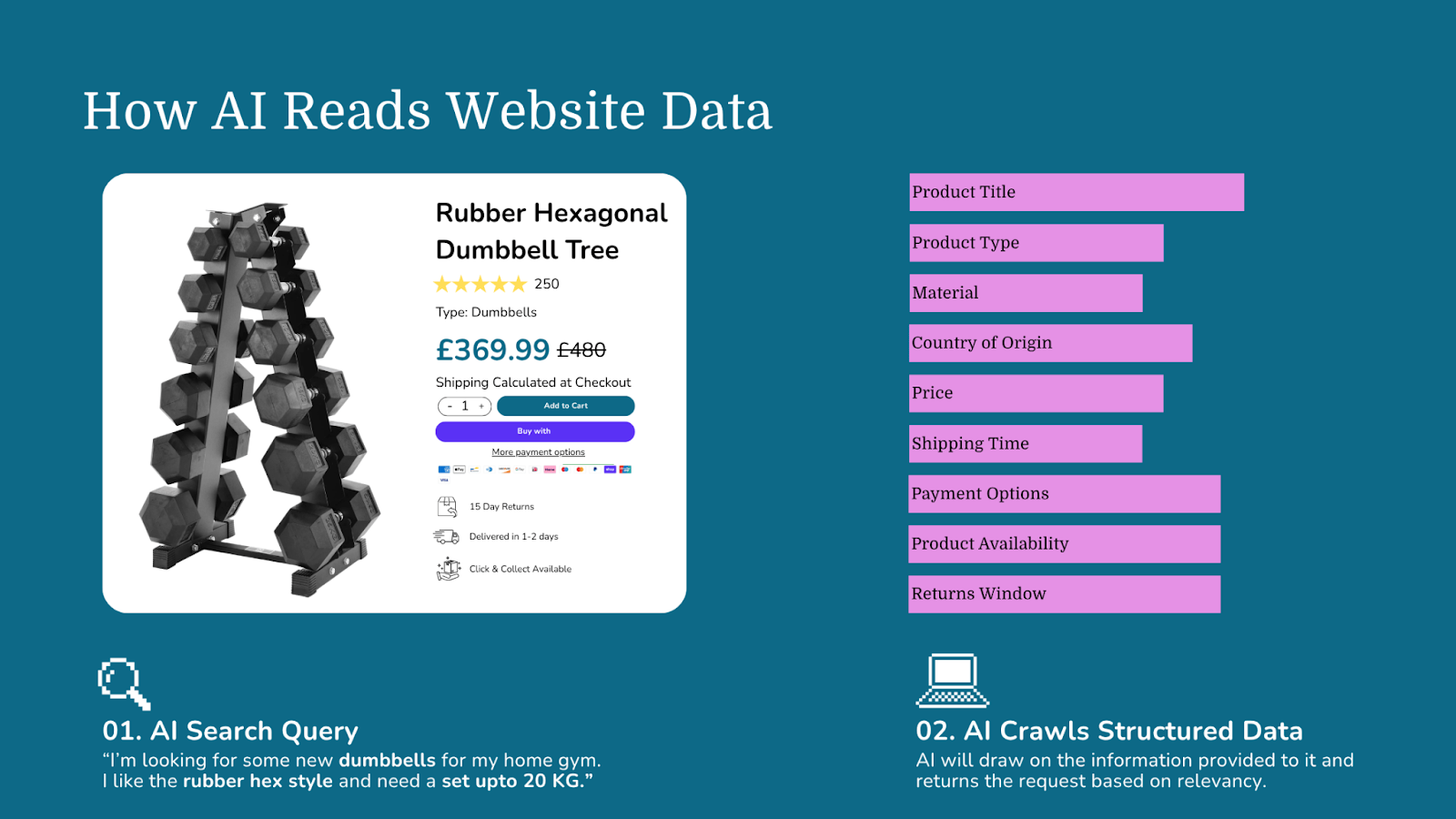
When products are uploaded through Shopify Catalog, AI channels can read structured data such as titles, descriptions, options, images, price, availability and other key attributes, with inventory and pricing kept up to date across channels. Shopify also highlights Catalog Mapping for stores where important data currently sits in metafields, metaobjects or custom logic.
That is a significant shift. Product data is no longer just for merchandising and SEO. It is becoming part of how your brand gets interpreted in AI-led commerce.
3. Shopify is lowering the integration burden
Shopify’s own enterprise content argues that without a platform handling this centrally, brands face separate integration projects, requirements and maintenance for different AI platforms.
Shopify positions migration to Shopify, or adoption of the Agentic plan, as the most direct way to make product data agent-ready and syndicated across platforms.
For merchants on legacy platforms, that is the real commercial story. This is not just another feature release. It is a sign that platform choice will start to shape who can participate in AI-led shopping without adding another layer of technical debt.
That is exactly where a Shopify replatforming project starts to become strategically relevant, especially for brands currently juggling Magento, BigCommerce or a heavily customised setup.
What Agentic Commerce Changes for Merchants
Agentic commerce does not mean Shopify brands need to rip everything up and rebuild. But it does change what “good” looks like.
Your storefront still matters, but it is no longer the only front door
The website remains critical for brand, conversion and customer experience. But it is now part of a wider commerce surface area that includes AI chats, conversational search and machine-readable product data and retail.
Shopify describes this shift clearly: commerce is no longer confined to websites or apps and is increasingly happening in AI chats, productivity tools and search results.
That means your store now needs to perform well for both humans and machines.
Merchandising clarity becomes more important
If your catalogue is inconsistent, bloated or difficult to interpret, AI channels may struggle to recommend the right products accurately. Messy variant naming, weak collection logic, vague descriptions and duplicate product data all become bigger problems when another system is doing the interpreting.
This is where structured merchandising starts to matter more than surface-level optimisation.
Operational reliability matters more too
AI channels depend on structured data and real-time accuracy, particularly around pricing and inventory.
That means operational friction is no longer just an internal efficiency issue. If stock data is unreliable or product information is out of sync, it can reduce your visibility and confidence in AI-driven buying journeys.
This ties closely to a wider theme we covered in our 2026 eCommerce Trends article: AI only creates value when the underlying data and processes are strong enough to support it.
What Shopify brands should focus on when it comes to agentic commerce
The opportunity for agentic commerce is exciting, but many merchants often miss the foundational work that gets products discovered in AI.
So if you’re asking yourself “What should I do on my Shopify store to improve AI discoverability?”, Kubix has put together a list of what you should focus on.
Agentic commerce represents an opportunity for Shopify merchants to surface their products in front of new audiences. The rollout of Shopify agentic storefronts will make this so easy, with most of the technical heavy lifting already taken care of.
What can merchants do to improve their product visibility in AI searches? Focus on enriching product descriptions with clear and useful information. And make sure product feeds are accurate and fully populated. - Will King
1. Clean up your product data
Start with titles, descriptions, attributes, taxonomy, categories and variant logic.
If key information is hidden in front-end logic, vague naming conventions or disconnected systems, it becomes harder for AI channels to interpret and surface your products accurately.
Machine-parsable, complete, real-time product data is becoming essential to modern eCommerce.
2. Make sure inventory and availability are trustworthy
AI-led shopping journeys rely on confidence. If a channel recommends a product and the availability is wrong, trust disappears quickly.
Shopify says its Catalog continuously updates product data to keep pricing and inventory accurate across AI channels.
3. Review where your product information actually lives
For some brands, the biggest issue is not missing data. It is useful data being stored in ways that are hard to reuse.
If custom fields, merchandising logic or grouping rules are not mapped cleanly, your store may be technically live but not genuinely ready for agentic commerce.
4. Think beyond acquisition
One of the most important details in Shopify’s rollout is that merchants remain the merchant of record and retain ownership of the customer relationship and post-purchase experience. Orders can still be attributed back to their originating channel.
That matters because AI discovery does not remove the need for customer retention. If anything, it makes post-purchase experience, owned data and lifecycle strategy more important.
That is why there is a natural overlap here with our guide to Customer Retention Strategies for your eCommerce Website, especially for brands thinking about how to turn AI-led discovery into long-term value.
Shopify AI, Agentic Storefronts and the Agentic plan
There are really two conversations happening here.
The first is about Shopify merchants already on the platform.
Shopify says eligible stores can already sell through its ChatGPT agentic storefront, with discovery and purchasing supported through ChatGPT, and that other agentic storefronts such as Google AI Mode, Gemini and Microsoft Copilot are still in early access for many stores.
The second is about brands not yet on Shopify.
As of March 2026, Shopify says its Agentic plan is publicly available and allows brands not using Shopify for eCommerce to add products to Shopify Catalog so they can sell across the same AI channels.
That is the part that merchants on legacy platforms should pay attention to.
If your current platform makes every new channel feel like another bespoke integration project, Shopify is now making a stronger case that it is not just easier to run, but increasingly easier to participate in whatever commerce looks like next.
For brands already considering a move away from Magento, BigCommerce, WooCommerce or a custom stack, this gives one more reason to assess whether continuing to maintain a fragmented setup still makes sense. Our Shopify replatforming service is built around exactly that kind of decision, helping brands reduce complexity while protecting the parts of the business that matter most.
Final thoughts
Agentic commerce will not replace your Shopify store. But it will change what your store needs to be good at.
The brands best placed to benefit will not simply be the ones with the best-looking site. They will be the ones with clearer product data, stronger merchandising logic, more reliable operations and a platform that makes new routes to market easier to support.
For Shopify brands, that is where the opportunity sits.
For everyone else, it may be the clearest sign yet that the future of commerce is going to favour platforms built for structured data, connected systems and lower operational friction.
FAQs
What is agentic commerce?
Agentic commerce is a model where AI systems help customers discover, compare and in some cases purchase products on their behalf, rather than simply pointing them to a list of links. Salesforce defines it as autonomous AI agents performing commerce-related tasks such as finding products and managing purchases, while McKinsey describes it as part of a broader shift toward agent-mediated transactions.
What is agentic commerce protocol?
There is not just one protocol being discussed, but Shopify’s developer documentation points to the Universal Commerce Protocol, or UCP, as an open standard that gives agents, merchants, payment providers and credential providers a common language for secure commerce interactions across the web. Shopify also provides MCP tools that are UCP-compliant for building agentic experiences.
Is Shopify agentic commerce available now?
Partly. Shopify says its ChatGPT agentic storefront is available to eligible stores, while storefronts for Microsoft Copilot and Google AI Mode and Gemini are still in early access and not yet available to all Shopify stores. Shopify also says the Agentic plan is publicly available for brands not already using Shopify for ecommerce.
Can brands on Magento or other platforms sell through Shopify’s agentic setup?
Yes. Shopify says brands not using Shopify for ecommerce can use the Agentic plan to add products to Shopify Catalog and sell across AI channels, including ChatGPT, Google AI Mode, Gemini, Microsoft Copilot and the Shop App.